

Article: Helix Inflamed? Everything You Need to Know
Helix Inflamed? Everything You Need to Know
You just got your new piercing and now your helix is inflamed? Instead of a clean look and elegant statement, are you experiencing redness, pressure, or an uncomfortable throbbing? That's annoying, but not all that unusual. Especially with a helix piercing, complications can occur during the healing phase, which can quickly feel unsettling. That's exactly why we want to take a closer look at why the ear around the helix piercing becomes inflamed and what you can do about it.
The most important thing in a nutshell:
An inflamed helix is usually no cause for concern, but simply a clear sign that your piercing needs more rest and proper care.
-
Common causes: pressure, touching (especially with unwashed hands), improper care or unsuitable jewelry
-
Symptoms & signs: bumps, proud flesh, redness, swelling or pus
-
What you should do: observe, focus on gentle care and avoid triggers; if you experience pain or if it gets worse: see a doctor!
Content:
-
Why the helix can become inflamed
-
Recognizing and classifying inflammation of the helix
-
What you can do to prevent inflammation
-
Helix inflamed - what now?
-
Answers to the most frequently asked questions


Why the helix can become inflamed
After getting a new piercing, the affected area always goes through a sensitive phase – this also applies to the helix. The body reacts to the small injury, works in the background, and tries to stabilize the piercing channel. This can quickly lead to irritation – sometimes even without you having done anything "wrong". Slight redness and a feeling of pressure on the ear are not unusual during this time. However, there are some things that can cause the helix to become inflamed and that you should pay attention to.
Healing phase – when the body simply does its work
Immediately after piercing, a process begins that requires a lot of patience. A helix is cartilage tissue and therefore much less supplied with blood than other parts of the body. This means that healing takes longer and the area reacts more sensitively to even the smallest changes.
During this phase, the body works very actively in the background. It tries to stabilize the piercing channel and at the same time protect it from external influences. Redness, slight swelling, or a feeling of tension are therefore not automatically a warning signal, but often part of a normal healing process.
However, this is precisely where uncertainty often arises, because the line between "normal healing" and "beginning inflammation" is not always immediately clear. The helix can appear calm on some days and suddenly react more sensitively on others. The most important thing in this phase is: rest. No unnecessary touching, no turning of the jewelry and as little pressure as possible. Your body needs time to stabilize the area – give it that time. If you are still concerned, contact your piercer for advice.

Mechanical irritation as a trigger
One of the most common reasons for inflammation of the helix is mechanical irritation in everyday life. It often happens unconsciously, so the inflammation comes as a surprise afterwards. You run your hand through your hair and touch the helix; your sweater gets caught on your ear when you change clothes; you unknowingly lie on the side with the piercing at night. Headphones, helmets, or hats can also exert constant pressure. These seemingly small stresses directly affect the piercing channel. The tissue is repeatedly minimally shifted or irritated, without having a long period of complete rest in between. The result: healing cannot progress and the helix becomes inflamed.
The difficulty is that mechanical irritation can hardly be completely avoided in everyday life. But the less touching and pressure, the better the helix can heal.
Care mistakes – more is not always better
When caring for a helix after piercing, people often think that more cleaning and tidying up is always better – after all, you don't want anything to get inflamed. In reality, however, the opposite can be true, and too frequent cleaning and "fiddling" with the piercing can be the cause of inflammation, as this disrupts the healing process.
Especially aggressive agents such as alcohol or strong disinfectant solutions attack the sensitive skin barrier. Instead of soothing, they dry out the tissue and make it more susceptible to irritation. Constant cleaning without clear routines can also do more harm than good. Therefore, only use the cleaning agents that your piercer has given you and follow the application instructions. Gentle cleaning at regular intervals is sufficient in most cases for the body to heal at its own pace.
Another important point is hand hygiene. Even small impurities can get into the piercing channel if the helix is touched regularly. This often happens unconsciously – for example, when styling hair or sleeping.

Unsuitable jewelry
The jewelry itself also plays a decisive role in the healing of a helix. If the helix is oozing, the ear around the helix is swollen and throbbing, or severe pain occurs, you should ask yourself whether the material of your ear jewelry could be the trigger - because not every material is suitable for permanent wear on the ear, and especially in the sensitive initial phase, inflammation can occur.
Inferior alloys or nickel-containing materials can irritate the skin and trigger reactions, as the body recognizes such substances as foreign bodies and reacts sensitively accordingly. And the design of the jewelry is also important: overly heavy piercings exert constant pressure on the area, while poorly processed edges can further irritate the tissue.
High-quality, smooth, and lightweight jewelry significantly reduces this burden. So make sure to choose a piece of jewelry, especially at the beginning, that facilitates healing for your body.
Recognizing and classifying helix inflammation
A helix can react differently during the healing phase, and not every change immediately means that inflammation is present. Nevertheless, there are clear signs that you should take seriously if your ear around the piercing changes or suddenly becomes more sensitive. Precisely because the helix heals slowly, it is important to look closely and distinguish between normal irritation and actual inflammation.
-
Inflamed helix with a lump: Small, firm thickenings around the piercing are often a sign of irritation or incipient inflammation. They often occur due to pressure, movement, or impaired healing and usually feel slightly sensitive.
-
Inflamed helix with proud flesh: When excessive tissue forms around the piercing channel, it is colloquially referred to as proud flesh. This can appear as a soft or slightly raised area and indicates that the skin – possibly due to inflammation – is overreacting and trying to protect the area.
-
Pustule on the helix: A yellowish or whitish fluid accumulation can indicate more severe inflammation. Especially if it is accompanied by a feeling of pressure, redness, or warmth, you should pay attention and observe the area.
In addition to these visible signs, sensations also play a role. Persistent pain, increasing redness, or a throbbing sensation are also indications that the helix may be inflamed.
Important: Not every symptom immediately means something serious. Calm observation and, if necessary, consultation with your piercer will help you to better assess whether it is a normal phenomenon of the healing phase or really an inflammation.
What you can do to prevent inflammation
Inflammation usually does not occur suddenly, but through many small irritations in everyday life. That is why you can prevent a lot with a few conscious decisions. The most important thing is to keep the area still and avoid unnecessary strain. No turning, no playing and as little touching as possible help the body to build up the piercing channel stably.
Apart from that, there are a few other things you should pay attention to: do not sleep directly on the helix if possible, avoid pressure from headphones or hats, and make sure to keep the area clean without stressing it excessively with exaggerated care.
A central point is also the jewelry itself.
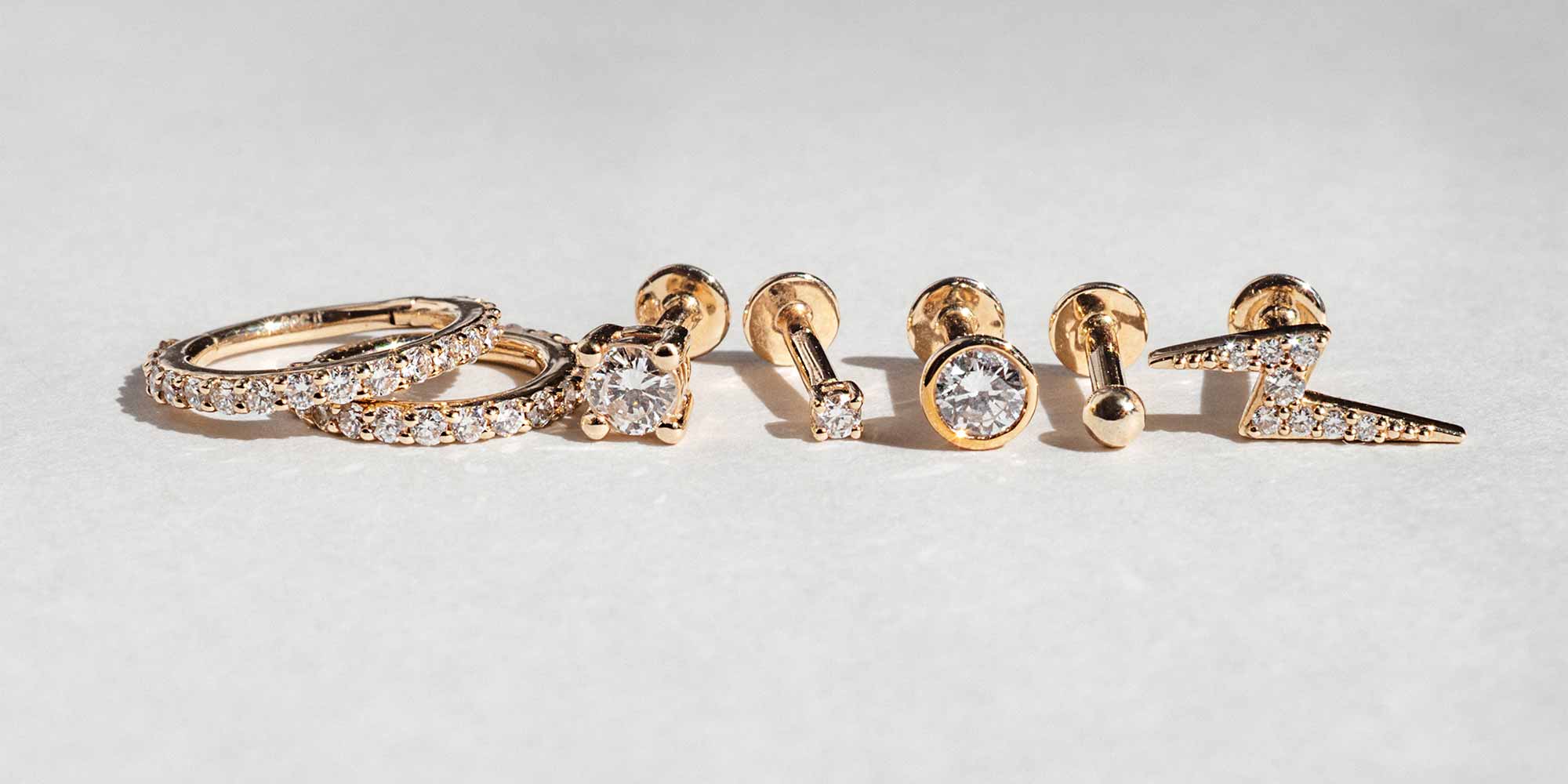
High-quality materials such as recycled real gold, which we use at fejn for our piercings and many other pieces of jewelry such as hoop earrings, stud earrings and necklaces, are particularly skin-friendly and avoid unnecessary irritation. This significantly reduces the risk of inflammation and, instead of worrying, you can simply enjoy your new ear jewelry.

Helix inflamed - what now?
If your helix is inflamed, there's no need to panic. It's important to stay calm and not worsen the situation by constantly touching the area. Inflammation often arises from small irritations that have accumulated over time, and in many cases, it can be calmed down if you react correctly now.
Avoid unnecessarily twisting or touching the jewelry. This further irritates the piercing channel and can worsen the inflammation. Clean the area gently only with suitable, mild solutions and keep your hands as clean as possible. Often, your piercer can give you special sprays or ointments for the inflamed helix. Cooling can also help, but be careful not to irritate the area further.
Many people ask whether they should remove the helix piercing if it is inflamed. Here you should not act prematurely, as the opening could close in the worst case, trapping the inflammation. So, before taking this step, be sure to talk to your piercer. If pain, pus, or severe swelling occurs, it is also advisable to see a doctor.
But in the vast majority of cases: if the helix is inflamed, it is not an immediate cause for concern and the inflammation can be successfully resolved.
Read more
Recognizing real pearls – what really matters
Pearls are among the most timeless jewelry materials. Their natural beauty, soft luster, and irregularity make them unique. At the same time, this very characteristic leads many to wonder how to di...
Read more